

Tax and savings on allowance — a parent's guide
Is your child taxable on their allowance? What about BSU, Vipps transfers, and the child's own bank account? A practical walkthrough for 2026.
There are two questions about allowance that parents ask more often than any other: “How much should we give?” and “Does it have to be taxed?” I’ve written about the first one before. The second is what I want to cover here.
Let me say it right away: this is not tax advice. I’m not an accountant. I’ve built an app for allowance, and I’ve talked to enough parents and professionals to have a workable overview — but if there’s something you’re unsure about, call the Norwegian Tax Administration (Skatteetaten). They’re actually helpful.
With that said, here’s what you should know.
Is allowance taxable for the child?
In practice: no. In theory: it depends on how large the amounts are and where they come from.
Allowance from parents is not wages in a tax sense. It’s gifts or transfers within the family. Gifts between close family members are tax-free in Norway — regardless of the amount. So even if you give your child 500 kr a week from the age of 6, there’s nothing the child has to report, and nothing you as a parent have to report.
What is taxable, on the other hand, is income from work outside the family. If the child vacuums for the neighbour for 100 kr, or looks after an aunt’s dog, or works in a shop after turning 13 — that’s wages.
And this is where the tax exemption card comes in.
The tax-exemption threshold in 2026
The tax-exemption threshold (the “frikort” limit) is 70,000 kr per year for 2026. That means all children and young people under 17 can earn up to 70,000 kr per year without paying tax — provided they have a valid frikort (an exemption card issued by the tax authority).
This applies only to external wages, not to allowance from parents. But if your child has a summer job, or does delivery work, or whatever it might be — then 70,000 kr is what they can earn tax-free.
A useful detail: the frikort has to be requested. It doesn’t arrive automatically. From the age of 13, the child logs in to skatteetaten.no (the tax authority’s website) and applies. If wages are paid out before the frikort is in place, tax is deducted as normal — and then it’s refunded at the tax settlement the following year. That’s an unpleasant experience for a child the first time around.
BSU — children’s most important savings tool
If there’s one thing I wish all Norwegian parents knew about, it’s BSU. The full name is Boligsparing for ungdom — a tax-favoured youth savings scheme aimed at saving toward a first home. It’s simply the best savings offer a Norwegian child can have access to.
Briefly, how it works in 2026:
| Detail | 2026 figures |
|---|---|
| Minimum age | 13 years |
| Upper age (first deposit) | 33 years |
| Maximum annual deposit | 27,500 kr |
| Maximum total savings | 300,000 kr |
| Tax deduction per year | 10% of the deposit |
| Maximum tax deduction per year | 2,750 kr |
| Lock-in | Must be used for housing |
The mechanism is simple: deposit up to 27,500 kr a year into a BSU account. You get 10% of the deposit back on your taxes the following year — up to 2,750 kr. On top of that, BSU typically pays a slightly higher interest rate than ordinary savings accounts.
For a 13-year-old saving 300 kr a month, that comes to 3,600 kr a year. That gives a 360 kr tax deduction — but only if the child has taxable income to deduct from. This is where many fall into the trap. If the child only has allowance from parents, there’s no tax to get back. In that case BSU is still a good savings account, but without the tax benefit. It’s only once the child starts having a summer job or other wages that the tax deduction begins to have an effect.
Another point: BSU money is locked to housing purposes. If it’s used for something else, the tax deduction has to be paid back. For some families, that’s a reason to keep part of the savings outside BSU — for flexibility.
A bank account for the child — and why many forget it
Many parents use their own account for the child’s savings. “I put it in our account and keep track of what’s the child’s.” It works, but it has two problems:
- Educational: The child doesn’t see the money as their own. It’s a column in mum and dad’s spreadsheet. The motivating effect disappears.
- Practical: If the parents’ finances get tight, it’s tempting to “just borrow a little” from the child’s share. It happens more often than people care to admit. A separate account removes the temptation.
So: open a separate account for the child. Most Norwegian banks do this for free from the moment the child is born. Be aware that the owner of the account, until the child comes of age, is the parents — but the money in the account is in practice the child’s.
At 15, the child can be given the right to use their own account, ideally together with BankID (Norway’s national electronic ID). At 18, they get full control.
Norway has a specific rule worth noting: children under 15 can own an account but cannot dispose of larger amounts without the guardian’s consent. That means if grandpa deposits 5,000 kr into a 7-year-old’s account, the money can’t be withdrawn by the child alone — but it belongs to the child.
Vipps under 15 — when does it make sense?
From the age of 13, children can get their own Vipps account (Vipps is Norway’s dominant mobile payment app) with their own BankID. That opens the door for children to receive and send money themselves.
It isn’t always smart to have it. Advantages:
- The child can pay for school lunch, the metro, small purchases.
- The child learns to handle their own transactions.
- Family can Vipps directly to the child instead of to the parents’ account.
Disadvantages:
- Vipps is very easy to use, and the child can quickly spend more than planned.
- Without oversight or limits, things can go wrong in a few minutes.
- The child can receive money from strangers (rare, but possible).
Our advice: wait until the child is 14–15, and set clear spending limits on the account to begin with. Most banks support children’s cards with adjustable limits.
Common traps parents fall into
After talking to many families, there are a few traps that come up again and again:
1. Forgetting to open a separate account for the child. They think “we’ll do it later” and never do. The savings become invisible.
2. Using the parents’ card for the child’s purchases. The child never experiences spending their own money. The result: saving becomes something that happens invisibly, in another dimension.
3. Opening BSU before the child has taxable income. It’s not wrong, but the tax deduction you get is 0 kr. In that case an ordinary savings account is often more flexible.
4. Mixing gifts and allowance. Grandma gives 1,000 kr at Christmas, 500 kr for a birthday, 200 kr now and then — this gets mixed in with the allowance and makes it impossible for the child to see a clear connection. Keep gift savings physically or digitally separate.
5. Forgetting the frikort. The child’s first summer job comes along, and tax is deducted from the wages because no one ordered the exemption card. Not pleasant.
What the Ukelønn app contributes
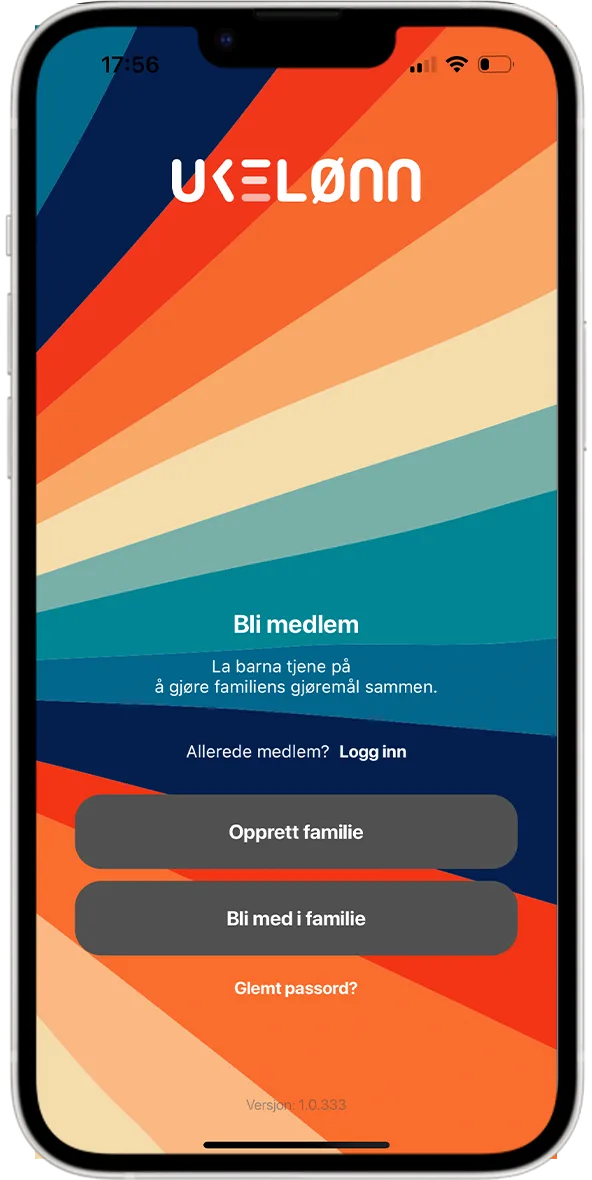
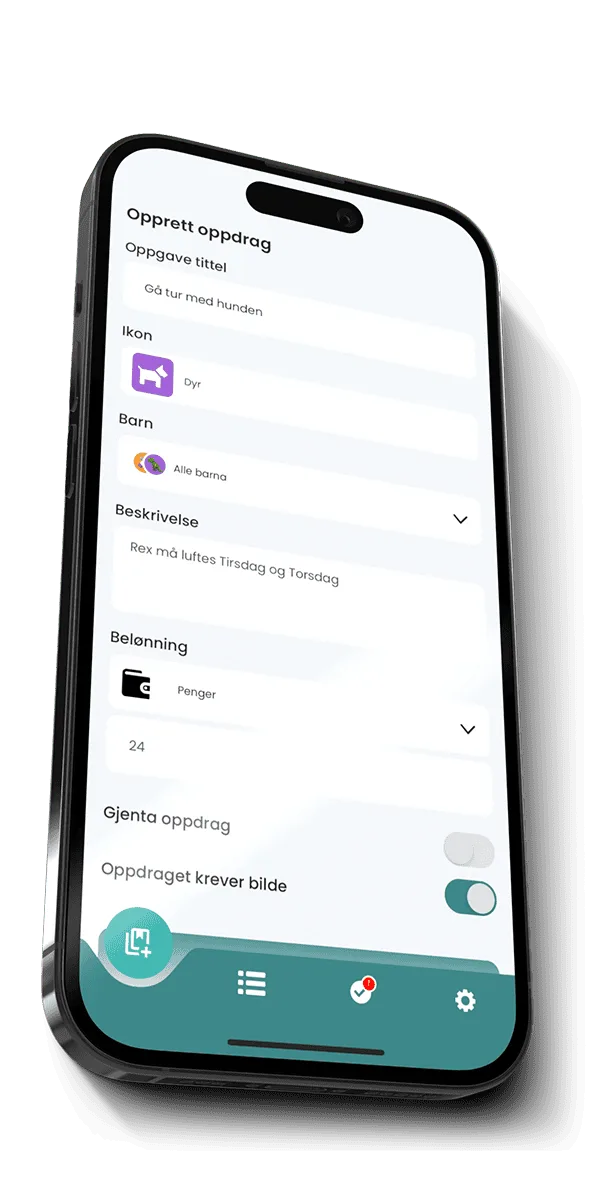
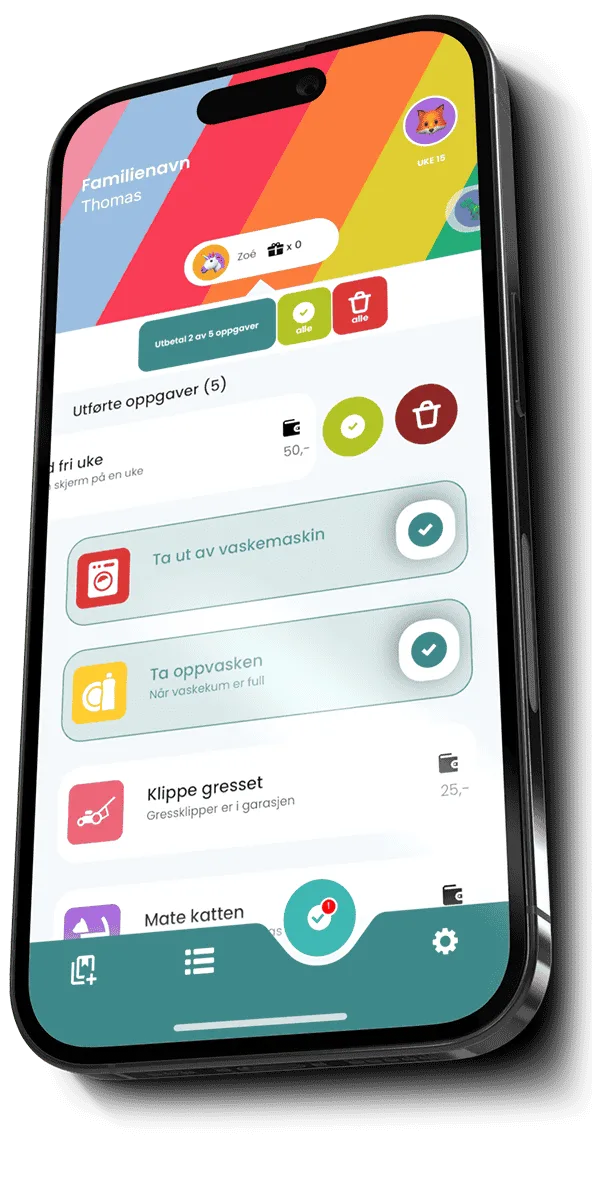
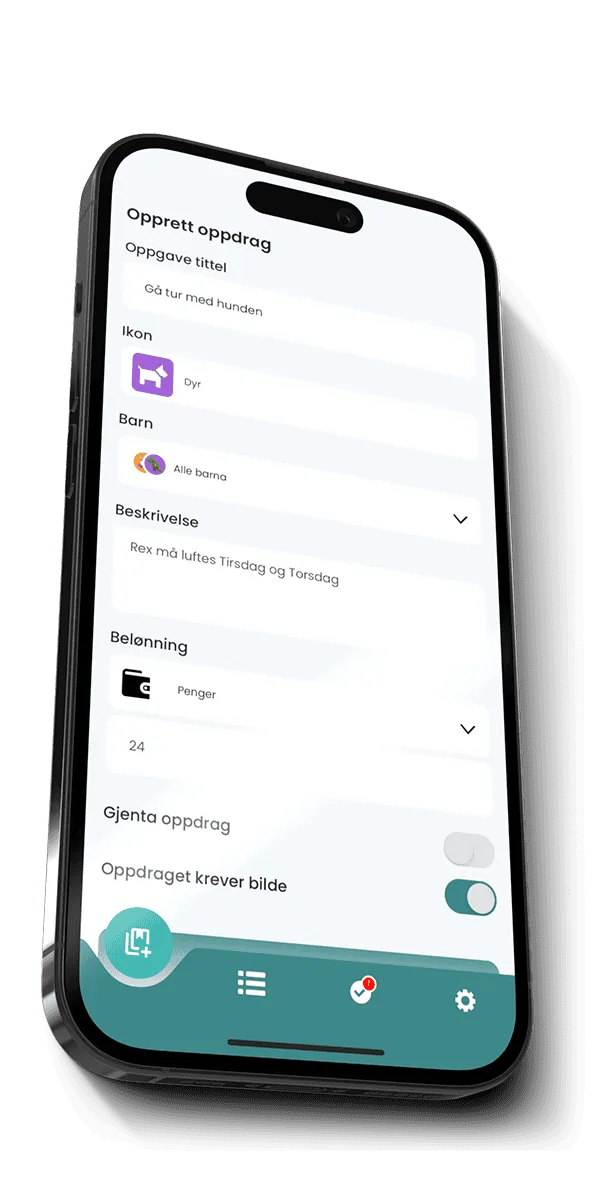
Our app doesn’t handle any actual bank transfers. It keeps a ledger of what parents owe the child based on completed chores and fixed allowance. When it’s time for a payout, the money is moved in the real world — typically Vipps, bank transfer, or cash.
This is a deliberate choice. We didn’t want to be a bank. We wanted to be an overview tool. It also means the app can work no matter which bank the family uses, and without requiring integration with complicated financial systems.
Summary
- Allowance from parents is not taxable.
- Income from external work is taxable, but the frikort covers 70,000 kr in 2026.
- BSU is the best savings offer from age 13 — but the tax deduction depends on the child having taxable income.
- Open a separate account for the child. The educational value of doing so is underrated.
- Vipps makes sense from age 14–15, with spending limits.
That’s the foundation. If you’re wondering about more questions on children’s finances, take a look at 5 habits that teach children the value of money. And if you’re about to set the amount, read how much allowance in 2026.
Disclaimer: This is general information, not tax advice. For questions about specific situations, contact an accountant or the Norwegian Tax Administration (Skatteetaten) directly.